
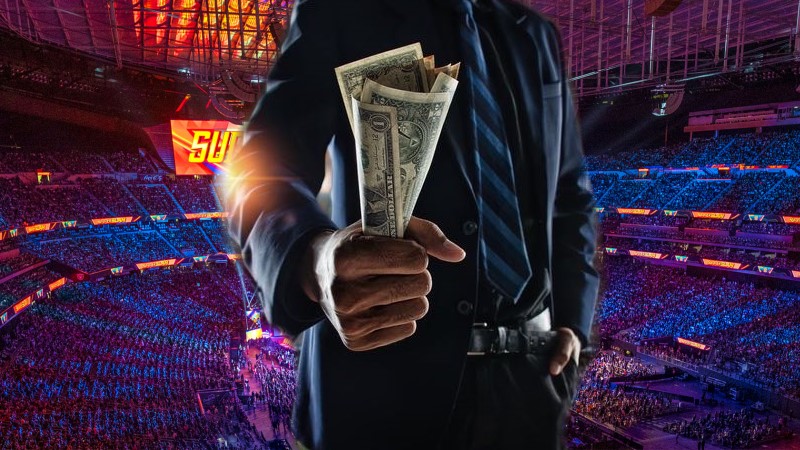
There was a time when watching a WWE pay-per-view meant sitting back and letting the spectacle wash over you. Now, for a growing portion of the audience, every match carries a financial dimension. The shift from passive viewer to active stakeholder has quietly reshaped how millions of fans engage with professional wrestling.
This isn’t just a casual trend. Betting on WWE events has created an entirely new layer of investment — emotional and financial — that runs parallel to whatever is happening inside the ring.
Live wagering on WWE pay-per-view events has changed the rhythm of watching a show. Fans aren’t simply reacting to surprises — they’re anticipating them, reading odds, and placing bets on match duration, interference spots, and who walks out with the title. Every near-fall becomes a moment of genuine financial tension, not just dramatic tension.
This creates what wrestling betting communities describe as a parallel game running beside the broadcast. Fan forums and Discord servers now function as informal trading floors, where members exchange picks, flag suspicious line movements, and process outcomes through a shared wagering lens.
Access matters as much as interest. Many wrestling fans who want to place a casual wager on WrestleMania or a premium live event aren’t looking to submit identification documents and wait days for account approval. That friction alone pushes a segment of bettors toward platforms designed for faster access. Fans seeking sports betting sites without verification are drawn to platforms that allow wagering on WWE events without extended onboarding processes — the kind of streamlined experience that suits someone betting recreationally rather than professionally.
The demand reflects a broader cultural shift in how people interact with online entertainment. Speed and simplicity have become baseline expectations, and betting platforms that can’t deliver both tend to lose casual users quickly.
WWE’s structure — long-running storylines, predictable archetypes, and a consistent event calendar — turns out to be surprisingly compatible with betting markets. With up to 18 major events scheduled annually and multiple matches per card, bettors have a steady pipeline of wagering opportunities throughout the year.
Storyline logic functions like form analysis in traditional sports. Fans who follow WWE closely can read momentum shifts — a superstar being booked strongly for weeks, a contract rumored to be expiring — and translate that narrative knowledge into betting decisions. The scripted nature of wrestling doesn’t eliminate uncertainty; it just changes which signals matter.
The data on wrestling fan crossover into combat sports betting points to something significant. Wrestling audiences share behavioral patterns with traditional combat sports bettors — analytical, community-oriented, and highly engaged with outcomes.
For WWE itself, this creates an interesting dynamic. Betting engagement tends to sustain viewer attention through moments that might otherwise feel like filler — midcard matches, secondary titles, undercard spots. When money is on the line, nothing on the card feels skippable. That kind of deep-cut engagement is precisely what WWE’s content strategy, built around long-form storytelling across weekly television and premium events, is designed to reward. The marriage of wrestling culture and sports wagering looks less like a novelty and more like a permanent feature of how fans now experience the product.
AdvertisementAdvertisement
Advertisement
 Posted in
  Tags:
Tags: