
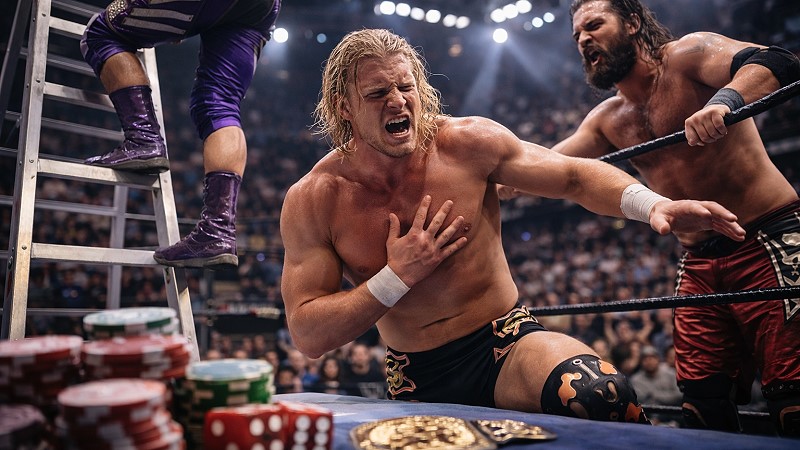
If you’ve watched professional wrestling for any length of time, you’ll know that the landscape has shifted quite dramatically over the last few years. There was a time, not so long ago, when scripts were being torn up minutes before a show went live. It made being a fan somewhat exhausting; you’d invest in a character only for them to disappear or have their entire personality changed overnight. Since Paul “Triple H” Levesque took the creative helm, things have settled into a much more rhythmic, logical pattern. This shift hasn’t just changed how we watch the show on a Monday or Friday night; it’s fundamentally altered how fans in the UK engage with the product outside of the ring.
We’re seeing a move away from just being passive viewers. Instead, the modern fan is more like a detective or a script analyst. Because the storytelling is now more consistent, it has opened up a fascinating world of narrative forecasting. People are looking at the way a character looks at a belt or the subtle phrasing in a promo to figure out where the story is headed three months down the line. It’s a bit like trying to predict the end of a long-running drama series, only the actors are performing stunts and the ending can change if someone picks up a real-world injury.
The Triple H Era: How Long-Term Storytelling Stabilises Speculation
The biggest change we’ve seen since the transition in leadership is the return of the “long game.” In the previous era, things felt impulsive. Now, there’s a sense that the creative team knows exactly where they want to be by the time WrestleMania rolls around. I’ve noticed that this stability makes it much easier for fans to form coherent theories. When you have a storyline like “The Bloodline,” which has spanned years rather than weeks, every single beat matters.
This long-term approach has essentially stabilised the speculation market. If you know that a certain wrestler is being positioned for a title run, you can track their progress through their win-loss record and their screen time. Triple H seems to value the “slow burn,” which is a godsend for anyone who enjoys the analytical side of the sport. It’s no longer about a sudden, inexplicable twist for the sake of shock value; it’s about a logical progression that rewards people for paying attention.
Many of us have experienced the frustration of a story being dropped without explanation. That happens far less frequently now. Instead, we get “Easter eggs” and subtle nods to wrestling history that suggest a deep level of planning. For the UK audience, which has always had a bit of a penchant for the more technical and storied aspects of wrestling (just look at the history of World of Sport), this style of booking resonates deeply. It turns every episode of Raw or SmackDown into a data point. We aren’t just watching a match; we’re looking for evidence of a creative pivot.
Rumour Mill Mechanics: Analysing Internal Reports and Backstage Chatter
Of course, the on-screen product is only half the story. The “meta-narrative” (everything that happens behind the scenes) is just as important for those trying to stay ahead of the curve. This is where the rumour mill comes into play. Reports from sites like WrestlingAttitude or the legendary Wrestling Observer provide the “scuttlebutt” that fuels the narrative markets.
Analysing these reports is a bit of an art form. You have to learn how to filter what’s a “work” (a scripted lie) and what’s a “shoot” (the truth). For instance, if a report surfaces that a certain top star has a contract expiring, that immediately impacts how we view their chances in a championship match. If they haven’t signed a new deal, the likelihood of them winning a major title drops significantly.
I find that the most interesting shifts happen when the “dirt sheets” and the on-screen booking start to contradict each other. That’s when the analytical fans really start to dig in. Is the company leaking false information to throw us off the scent, or is there genuine backstage friction? In the current era, backstage reports are often more about creative direction than personal drama. We hear about which producers are working with which talent, and that gives us a hint about the match quality and the intended winner. It’s a complex puzzle where the pieces are constantly moving, and for the savvy UK fan, keeping up with these internal reports is part of the weekly routine.
Novelty Markets & The Analytical Fan: The Rise of Narrative-Based Wagering in the UK
The shift in how stories are told has led to a very specific trend in the UK. We’ve always been a nation that enjoys a bit of a flutter on novelty markets (who will be the next James Bond, or what colour will the Queen’s hat be at Ascot?). Professional wrestling fits perfectly into this niche. Because the outcomes are predetermined by a creative team, you aren’t betting on an athletic contest in the traditional sense; you’re betting on your ability to outthink a group of writers.
It’s an intellectual challenge. Many UK fans have transitioned from being passive viewers to active analysts. They look at the creative direction, the backstage rumours, and the historical patterns of the booking team to see if their predictions hold water. One of the ways they do this is by exploring sports betting uk options on regulated platforms. It’s not about the money for these fans; it’s about the validation. Being able to say “I saw that heel turn coming three months ago” is the ultimate badge of honour in the wrestling community.
Using these platforms allows fans to see how the rest of the world views a particular storyline. If a wrestler’s odds suddenly shorten for a Royal Rumble win, it usually means a leak has occurred or a massive shift in the creative narrative has been spotted by the collective “hive mind” of the fanbase. It adds an extra layer of engagement to the viewing experience. You’re no longer just shouting at the telly; you’re testing your theories against a broader market of opinions.
Strategic Tools for PLE Cycles: Monitoring Real-Time Shifts on Mobile Platforms
The intensity of this analysis peaks during the Premium Live Event (PLE) cycles. Events like SummerSlam, Survivor Series, and the Royal Rumble are the “season finales” where the big narrative pivots happen. In the hours leading up to these shows, the information flow is relentless. We see “smart money” coming in, which often indicates that the final script has been handed out to the crew.
In the modern age, we aren’t tethered to a desktop to keep track of this. Most of the heavy lifting is done via mobile devices. Whether you’re on the train or sitting in a pub with friends before a show starts, you can monitor how the creative winds are blowing. Platforms like https://www.ballycasino.co.uk/sports-betting provide the interface necessary for tracking these live shifts. If a wrestler who was a heavy favourite suddenly becomes an underdog thirty minutes before the opening bell, you know something has changed backstage.
This real-time monitoring has become a staple of the “second screen” experience. We’re watching the match on the big screen while checking the latest updates and market moves on our phones. It creates a sense of being “in the know,” even if we’re thousands of miles away from the arena. For the UK fan, often staying up until 4:00 AM to watch these shows live, having these tools makes the experience feel more interactive and less like a solitary late-night slog.
The Future of Engagement: Responsible Forecasting and Data-Driven Fandom
As we look toward the future, it’s clear that this data-driven approach to being a fan is here to stay. The days of simply accepting whatever the screen tells us are gone. We want to know the “why” and the “how.” We’re looking at contract lengths, merch sales, and social media engagement as metrics for success, just like the WWE executives do.
However, it’s important to remember that this should all be about enhancing the enjoyment of the show. Forecasting creative shifts is a hobby, a way to engage more deeply with a form of entertainment we love. It’s about the satisfaction of seeing a long-term story pay off and knowing you were right about the direction it was taking.
Please remember to keep things fun and safe. Wrestling is a spectacle, and while the analytical side is fascinating, it should never feel like a source of stress. Always keep your engagement within your means and stay informed through reputable sources.
***
Please gamble responsibly. For advice and support, please visit BeGambleAware.org or call the National Gambling Helpline on 0808 8020 133. You must be 18 or over to participate in any form of wagering in the UK.
***
What we’re seeing now is a more sophisticated version of fandom. We’ve moved past the “it’s fake” arguments of the 90s and into an era where we appreciate the “craft” of the storytelling. By watching the markets and the rumour mills, we’re essentially looking behind the curtain to see how the magic is made. And honestly, in the “Triple H” era, the magic has never been more interesting to pull apart. Whether you’re a casual viewer or someone who tracks every backstage report, there’s no denying that the way we consume WWE has changed for the better. We’re all analysts now, and the show is all the more better for it.
AdvertisementAdvertisement
Advertisement
 Posted in
  Tags:
Tags: