Stay tuned to WrestlingAttitude, WA.Com

Stay tuned to WrestlingAttitude, WA.Com
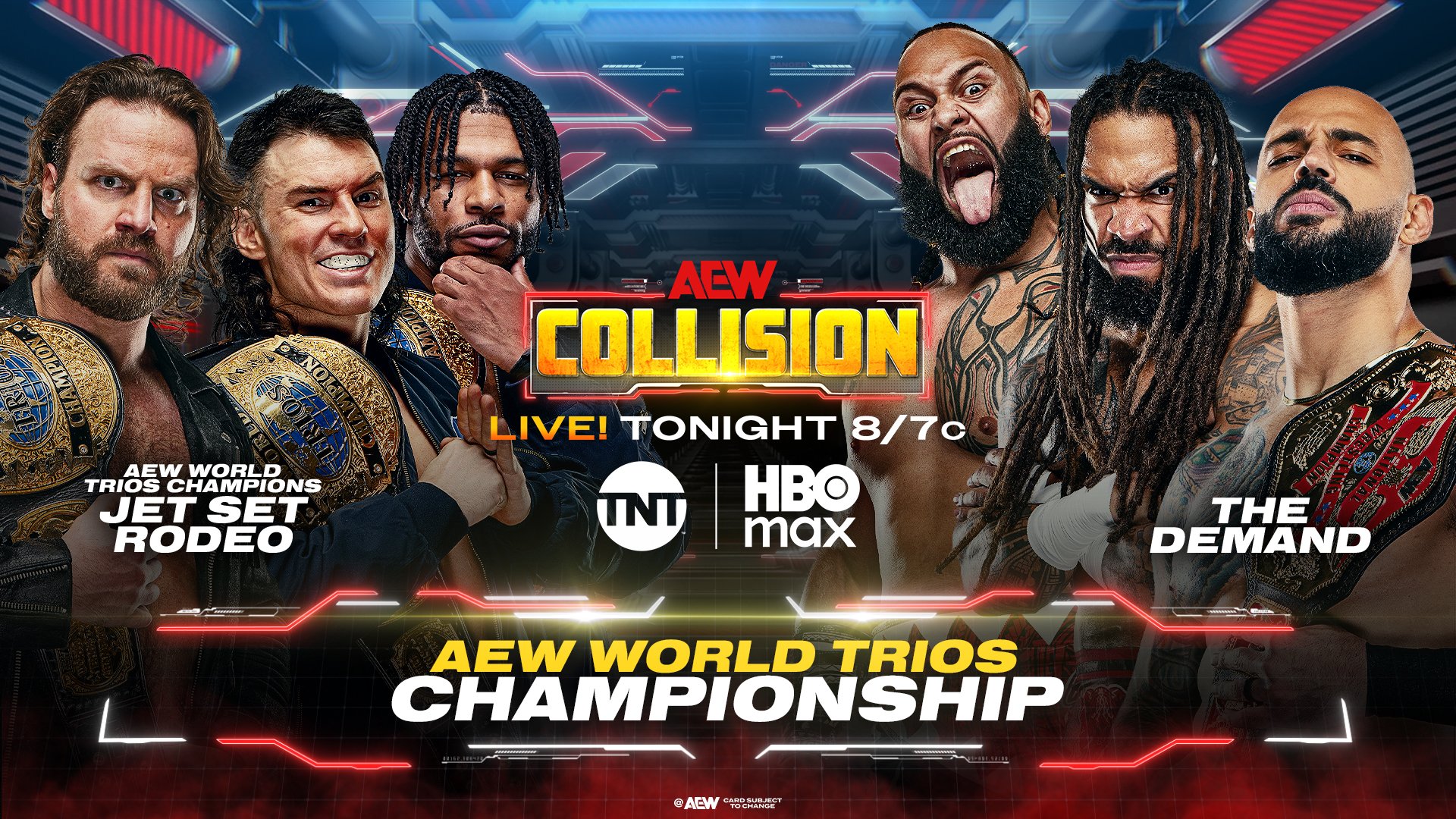
AEW Collision Results – February 21, 2026
AdvertisementAdvertisement
Advertisement

Wrestling has always travelled well. A suplex needs no translation, and the villain’s grin reads the same under neon in Tokyo as it does beneath arena lights in Chicago. What has changed is the engine around the spectacle: streaming contracts, international supercards, and creators who clip every twist before the bell has finished echoing. The growth comes from more entrances into the story: weekly TV, live tours, games, short-form video, and the online debate that stretches a two-hour show into a week-long conversation.
Distribution is the loudest reason the business keeps growing. WWE’s move of Raw to Netflix in January 2025 pushed wrestling into the same global pipeline as prestige series, making appointment viewing easier to sustain across borders. In many regions outside the U.S., Netflix carries WWE weekly shows and Premium Live Events (availability varies by country), reducing the old patchwork of rights that used to fragment fandom. AEW has followed the same logic by adding streaming on Max in the United States from 2025.
Live events have become strategic, not nostalgic. WWE’s run of international Premium Live Events showed how a city can be written into the show’s atmosphere, with the crowd framed as a co-star rather than background noise. WWE promoted backlash in Puerto Rico in 2023 as a record-setting edition of the event, and the lesson was plain. When fans feel selected, they perform with an intensity that sells the next ticket and the next subscription. Stadium and arena weekends also create their own marketing: thirty seconds of a roaring crowd can persuade a casual viewer more effectively than any trailer.
Worldwide growth is visible in rosters. The pipeline no longer runs in a single direction, with everyone eventually funnelling into one company’s system. Wrestlers circulate between ecosystems, carrying styles with them: the pace of New Japan Pro-Wrestling, the lucha libre tradition of Mexico’s major promotions, the European scene’s compact intensity, and WWE’s television polish. Stars such as Rhea Ripley, Gunther, Cody Rhodes, CM Punk, Bianca Belair, and Roman Reigns are marketed to audiences that already watch globally, so “international” is no longer a special label.
Modern wrestling is rarely watched alone, even when the viewer is physically by themselves. A near-fall becomes a GIF before the referee’s hand hits the mat, and a promo line becomes a caption that travels faster than the next commercial break. Some fans choose to download the MelBet app (Arabic: تحميل تطبيق melbet) to keep schedules, live scores, and in‑play numbers close while they watch, especially during big cards when momentum swings feel sudden. The appeal is practical: wrestling borrows the surface language of sport, so viewers enjoy tracking how stipulations, crowd heat, and surprise run-ins shift expectations in real time. When that interaction sits beside highlights and statistics, the “watch” becomes a session, and the session becomes a habit.
Wrestling’s scale is built on objects you can carry. A Roman Reigns shirt, a Rey Mysterio mask, and an entrance theme in a playlist are portable signals that keep the brand alive between events. Video games amplify the loop. The WWE 2K series works like a playable archive, introducing legends and current stars in the same menu and turning storylines into something fans can rehearse on their own terms. Licensing then feeds back into television: the character who moves merch gets more spotlight, and the spotlight creates more clips, which sell more merch.
True growth in this industry isn’t about one dominant company; it actually thrives on a crowded, competitive landscape. While WWE and AEW solidify the North American mainstream, the real energy comes from the broader ecosystem: TNA, New Japan, Stardom, CMLL, AAA, and a buzzing independent scene. This collective creates vital pathways and cross-pollination. Fans are loyal to the wrestlers first, following them across various promotions and discovering brands second, which makes the entire world feel much bigger than just one promotion’s calendar. Crucially, this competitive pressure forces everyone to raise the bar on production and presentation; on a global feed, no company can afford to look minor.
By 2026, wrestling doesn’t look like a mere regional attraction. It’s now a full-fledged, touring media franchise with multiple distribution lanes, such as weekly shows airing on major platforms and the biggest U.S. live events making their home on ESPN’s streaming stack. Its continued ascent is due to its unique ability to be a sport, a theater, and a pop concert all at once. The instant the bell rings, the crowd jumps up, a clip goes viral, and somewhere in the world, a new viewer is hooked by this one-of-a-kind spectacle.
AdvertisementAdvertisement
Advertisement
As of right now, CM Punk vs. Roman Reigns is one of the only matches that is evident for WWE WrestleMania 42 in April. Following up on their Triple Threat from last year’s show, with Seth Rollins removed from the equation, Punk and Reigns will main event one of WrestleMania’s two nights. Speaking on his “Off The Top” podcast, Reigns’ cousin Rikishi Fatu shared his assessment of how the match has been built so far.
“It feels organic on so many personal levels,” Rikishi said of the feud. “The legacy that both of these gentlemen carry through this industry – it’s so personal for CM Punk. Been there, done it all, everything, from A to Z. In the indies so long, coming into WWE, all the drama that follows CM Punk and now to finally get the taste of what every man works for, what every woman works for – to main event WrestleMania, the biggest show on earth.”
Once Punk performs in the main event of WrestleMania for the second year in a row, Rikishi believes there isn’t much left for Punk to accomplish in the industry, and he’ll be able to retire at any point knowing that he did it all. As for Reigns’ place in the rivalry, Rikishi referred to him as a needle-mover.
“Every time he comes through, every time he’s a part of something, that is huge for WWE, because numbers don’t like,” Rikishi stated. “His involvement into the WWE, into the family business, has truly taken us to another level, and when I say us, I mean the fans, I mean TKO, I mean WWE, I mean The Bloodline, I mean the family members – everybody.”
Rikishi then compared Reigns to Superman, and said that he and Punk are two of the absolute best in WWE right now.
If you use any of the quotes in this article, please credit “Off The Top” and provide a h/t to Wrestling Inc. for the transcription.

While 2026 is well underway, January’s free agency pool remains vast, with stars like WWE and NWA alum EC3 still without contract. One of the hottest free agents on the market, however, remains NJPW’s David Finlay, whose next destination is up in the air — especially after WWE is reportedly not involving the international star in their recent plans.
According to Fightful Select, Finlay, who was once a write-in for WWE’s next free agent acquisition, has not been “factored in” to WWE’s immediate creative plans, despite both Finlay and WWE recently making contact. As of writing, neither Finlay nor WWE have reported any further details regarding a possible debut.
While the lack of progression between Finlay and WWE is disheartening, Finlay has been incredibly successful without WWE to-date, all while working alongside some of the hottest up-and-coming stars. Finlay made his name in NJPW as a two-time IWGP Global Heavyweight Champion, a one-time IWGP Tag Team Champion, and a one-time Impact World Tag Team Champion (both with Juice Robinson). Finlay is also known for his time as the leader of the Bullet Club War Dogs, an off-branch of the infamous Bullet Club. Finlay has also wrestled in Ring of Honor, where he rubbed shoulders with current ROH World Champion and former AEW World Tag Team Champion Bandido. Finlay’s in-ring connections don’t stop there: he is the son of Fit Finlay, a former WWE United States Champion and current road agent and trainer for the Stamford-based company.

Bianca Belair has survived the Royal Rumble, the Elimination Chamber (twice), and multiple WrestleMania matches, but “The -EST’s” battle to recover from multiple finger fractures has proved to be one of her most difficult to-date. Belair recently underwent surgery to fix a troublesome left ring finger, but the healing process has just begun, as seen in a recent Instagram post.
Early Saturday, Belair took to her Instagram Stories to document her at-home recovery progress. Throughout her three posts, fans observed Belair’s ring finger, in all of its stitched glory, as it was tended to by Montez Ford, Belair’s husband. Ford donned black medical gloves as he cleaned his wife’s stitches and helped her fold her finger: a simple action made complicated by Belair’s fractured knuckle.
“He cringed and hated every minute of it,” Belair wrote, “but look how far down he got my finger.”
Despite initially struggling to make a fist immediately after surgery, Belair’s finger flexibility seems promising after Ford successfully bent Belair’s afflicted finger towards her bottom palm. It is unclear when Belair will be cleared for an in-ring return, however, as broken knuckle recovery times are vast. Sources such as the Hand and Wrist Institute and the Hand & Upper Extremity Center of San Antonio claim that recovery can take anywhere from two to twelve weeks, depending on the severity of a patient’s fracture and the type of surgery they underwent.
While Belair has remained relatively active within WWE, her last match, where she sustained her injury, was at WrestleMania 41, where a triple German suplex spot ended with her hand becoming stuck under Rhea Ripley. WWE originally anticipated an in-ring return for “The -EST” in early 2026, but her injury’s complexity effectively nixed those hopes.