Few wrestlers have had as interesting a career as WWE Hall of Famer Scott Steiner, who evolved from one of the most athletic wrestlers in history as a member of the Steiner Brothers into Big Poppa Pump, the muscled up, chainmail wearing genetic freak who popularized Steiner Math. But it was during his time with WWE that Steiner became known for less fun reasons, as his matches became frequently marred with botches and mistimed moves.
But while most attributed the decline in Steiner’s performance to him focusing more on his physique than his performance, that was not the reason, at least according to former WWE star Maven. One month ago on his YouTube channel, Maven discussed his time working with Steiner in the United Wrestling Federation back in 2007. He was overall complimentary to Steiner for the work they did together, while also revealing that Steiner had a health issue that Maven believed was the catalyst for Steiner’s in-ring decline.
“He had a condition known as drop foot, making it difficult at times to lift the front part of his foot,” Maven said. “And in the ring, this would sometimes lead him to botch spots. So, Scott was…I don’t want to say half of the wrestler he once was, but he definitely wasn’t the wrestler that we all knew and loved from WCW.
“That said, he’s still Big Poppa Pump, he still looked like this, and he still commanded not only respect, but still a little bit of fear. Scott was always easy to work with, and I left every match, every time I was in the ring the exact same way I went in, 100% healthy.”
If you use any of the quotes in this article, please credit “Maven Huffman” and provide a h/t to Wrestling Inc. for the transcription
Professional wrestling is often described as sport or spectacle, but its real strength lies in storytelling. At its core, wrestling operates as a long-running television series built on episodic structure, recurring characters, and narrative arcs that can unfold over years. Matches are rarely standalone moments. They function as chapters within a larger story that rewards viewers who follow consistently.
This is why engagement does not end when a weekly show goes off the air. Fans revisit promos, debate booking decisions, and speculate about future developments in the same way television audiences discuss episodes between broadcasts. These habits define modern wrestling fandom, and for some viewers that between-show routine includes regular online check-ins through Zodiaccasino, folded naturally into how they stay connected to ongoing narratives.
In serialized entertainment, points of return matter. Just as tuning in for the next episode maintains continuity, accessing familiar spaces through Zodiac Casino login becomes part of a broader fan rhythm that mirrors coming back to follow the next chapter of an unfolding storyline.
Wrestling as Episodic Storytelling
Weekly wrestling shows are structured as episodes rather than conclusions. Each broadcast advances several storylines at once, often without resolving them fully. Confrontations end abruptly, alliances shift without closure, and rivalries escalate without payoff.
This mirrors episodic television. Episodes exist to move the plot forward, not to resolve it. Closure is saved for major events, where long-running conflicts reach a turning point.
Seen through this lens, unfinished matches make sense. Their purpose is progression, not resolution.
Character Arcs That Take Years to Pay Off
Wrestling characters evolve in real time. Unlike scripted television, performers age, adapt, and respond to audience reaction over decades.
Fans follow these changes closely. A slight shift in presentation or motivation can signal the start of a new arc. Over time, these adjustments accumulate into meaningful transformations.
This long-term development explains why certain moments resonate so strongly. When a character finally changes direction, the impact is amplified by years of context.
Heel Turns, Returns, and Reinvention
Heel turns are among wrestling’s most powerful storytelling tools. A single decision can reframe an entire career.
Returns function similarly. When a wrestler reappears, past storylines regain relevance. Reinvention allows characters to evolve without abandoning history.
These devices succeed because wrestling treats memory as canon.
Kayfabe and Narrative Consistency
Kayfabe today is less about realism and more about internal logic. Fans accept exaggeration, but they expect consistency.
When character behavior contradicts established motivation without explanation, immersion suffers. Continuity anchors even the most theatrical moments.
Successful promotions acknowledge history. Past feuds matter. Wins and losses shape perception. Consistency allows stories to stretch across years without collapsing.
Weekly Shows vs Pay-Per-Views
Different formats serve different narrative purposes.
Weekly Shows
Pay-Per-Views
Advance storylines
Resolve major arcs
Build tension
Deliver payoff
Develop characters
Cement moments
Introduce conflict
Close chapters
Weekly television lays groundwork. Pay-per-views provide resolution. Confusing these roles weakens storytelling.
Wrestling and Television Story Structure
The parallels between wrestling and television are clear.
Wrestling Element
TV Series Equivalent
Weekly shows
Episodes
Long feuds
Seasonal arcs
Pay-per-views
Season finales
Character turns
Plot twists
This structure explains wrestling’s durability. It adapts familiar narrative mechanics to a live, evolving medium.
Why Fans Stay Engaged Between Shows
The spaces between episodes are where wrestling fandom thrives. Fans analyze segments, revisit finishes, and debate future directions.
Online discussion keeps narratives active. Speculation fills the gap between broadcasts and deepens investment.
This engagement is participatory. Audience response influences booking, creating a feedback loop rare in other storytelling formats.
Booking Logic and Long-Term Payoff
Effective booking resembles long-form scriptwriting. Seeds are planted early, often subtly, before growing into major moments.
Patience is essential. Not every tease requires immediate payoff. Delayed resolution builds anticipation.
When payoff arrives and aligns with established logic, it feels earned rather than forced.
When Storytelling Breaks Down
Problems arise when short-term decisions override continuity. Abrupt reversals without explanation undermine trust.
Fans notice abandoned arcs and forgotten history. Once consistency erodes, investment follows.
Strong storytelling respects what came before, even when adjusting direction.
Why Wrestling Fans Read Stories Differently
Experienced fans instinctively read wrestling as narrative. They recognize foreshadowing, callbacks, and motivation.
This literacy develops over time. It explains why long-time viewers find depth where casual audiences see confusion.
Wrestling rewards attention and memory.
The Value of Long-Form Wrestling Narratives
In an era of fragmented content, wrestling remains committed to long-form storytelling. It asks viewers to invest emotionally and temporally.
That investment creates loyalty. Fans who have followed arcs for years experience outcomes more intensely.
This connection cannot be created through isolated moments.
Wrestling as an Ongoing Series
Understanding wrestling as a serialized story reframes matches. The key question becomes why this moment matters now.
Context gives action meaning. Without it, even great performances feel hollow.
Story turns spectacle into narrative.
FAQ
Why is wrestling often compared to a TV series?
Because it uses episodic storytelling, recurring characters, and long-term narrative arcs.
What makes long-term booking effective?
Consistency, patience, and respect for established history allow payoffs to feel earned.
Why do fans stay engaged between shows?
Discussion, speculation, and analysis keep storylines active outside broadcasts.
What role does kayfabe play today?
Kayfabe preserves internal logic, keeping stories coherent even in exaggerated settings.
NXT Championship Ladder Match Field Finalized – The lineup for next week’s NXT Championship ladder match is now complete, with four additional competitors officially added to the bout that will determine a new titleholder.
Dion Lennox, Keanu Carver, Jackson Drake, and Joe Hendry have all been confirmed for the ladder match and will join Shiloh Hill, Ricky Saints, and Sean Legacy, who were either announced or qualified on last week’s episode of NXT. The seven-man match will headline the February 3 edition of the show.
Lennox and Carver secured their spots by winning qualifying matches on 1/27 episode. Lennox defeated Myles Borne, while Carver picked up a decisive victory over Andre Chase. Their wins solidified their entry into what is shaping up to be one of the most chaotic title matches in recent NXT history.
Earlier in the show, Joe Hendry was found laid out backstage, with Jackson Drake discovered nearby holding a steel chair. NXT General Manager Ava confronted Vanity Project over the incident and initially threatened to fire the group. Drake countered by stating there was no proof they were responsible for the attack. Ava ultimately agreed to place Drake into the ladder match but ruled that Vanity Project would be banned from ringside. She also stated that Hendry would be added to the match if he was medically cleared, which later proved to be the case.
The episode closed with all seven ladder match participants brawling around the ring. Ricky Saints briefly stood tall after retrieving a ladder, but Hendry made a surprise appearance and took him out with the Standing Ovation. That moment was short-lived, as Carver entered the ring and laid out Hendry, ending the show standing over his fallen opponents.
Elsewhere on the show, Sol Ruca and Zaria were named the new number one contenders for the TNA Knockouts Tag Team titles and are set to challenge The Elegance Brand next week. Tension between the two continued to grow, with Zaria expressing frustration over Ruca’s absence earlier in the night.
It was also revealed that Ava had arranged bail for Tony D’Angelo, citing NXT’s need to hear his intentions. D’Angelo is scheduled to address his future on next week’s show and was specifically warned not to interfere in the ladder match.
WWE NXT February 3 lineup
Ladder match for NXT Championship: Dion Lennox vs. Keanu Karver vs. Jackson Drake vs. Joe Hendry vs. Shiloh Hill vs. Ricky Saints vs. Sean Legacy
Women’s NXT North American Championship: Izzi Dame defends against Thea Hail and Lola Vice
TNA Knockouts Tag Team titles: Elegance Brand defend against Sol Ruca & Zaria
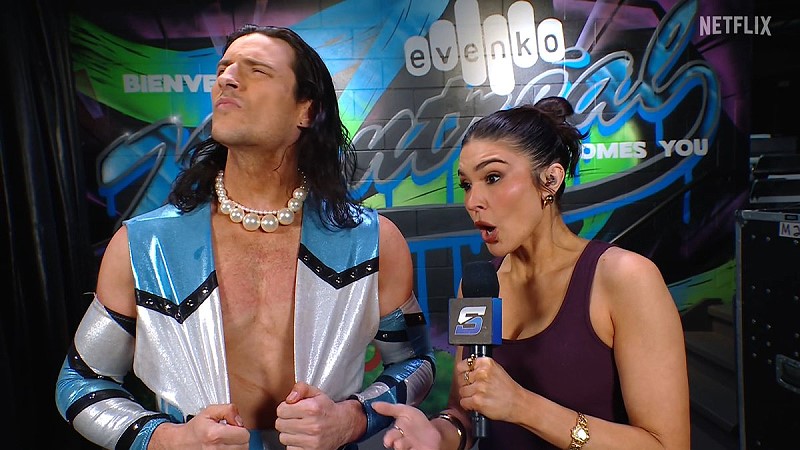
Kit Wilson Embraces Catchy New Theme Song – Kit Wilson’s transition into singles competition on SmackDown has come with an unexpected breakout element: a new entrance theme that has quickly caught on with the WWE audience. With his Pretty Deadly tag team partner Elton Prince sidelined due to injury, Wilson has stepped into a solo role, and the presentation shift has clearly resonated.
Appearing on INSIGHT with Chris Van Vliet, Wilson addressed the reaction to his new theme and confirmed that its catchiness was no accident. The SmackDown star explained that creating something instantly memorable was the entire goal from the beginning.
“Yeah, it’s super catchy. That was what I was going for,” Wilson said. “That was what I was hoping for. I didn’t think I realized how catchy it was going to be, and how much it’s kind of clicked on and sat with people, but I’m not complaining.”
Wilson also revealed that he played a significant role in shaping the song once it became clear he might be going solo. According to him, he was proactive in pushing for new music and eventually became directly involved in the creative process.
“So I ended up having a fair amount of input,” Wilson explained. “I was pushing for new music when I kind of found out what the situation was going to be, and maybe I was going to go solo, I started messaging a lot, saying I would love new music.”
After connecting with WWE music producer Neil, Wilson prepared a detailed breakdown of his vision.
“I started writing this email, just with all my references, with all the songs I like, with all the ideas I had, lyrics, kind of the theme of it, the vibe of it.”
One of his strongest ideas was opening the theme with a phone call, inspired by modern pop music trends.
“I really wanted that. So that was my first thing. I wanted a phone call. I wanted to ring, I wanted to pick up. I wanted a ‘Hey Kit, are you there?’”
Wilson cited influences ranging from Charli xcx, Billie Eilish, Chappell Roan, and BLACKPINK’s JENNIE, to Harry Styles and The 1975. He also referenced Pretty Deadly’s indie theme and UK pop influences like Jade from Little Mix. After several revisions, Wilson felt the final version perfectly captured his personality.
As Wilson continues his singles run on SmackDown, the theme has become a defining part of his presentation, helping establish him as more than just half of a tag team and reinforcing his connection with the audience.
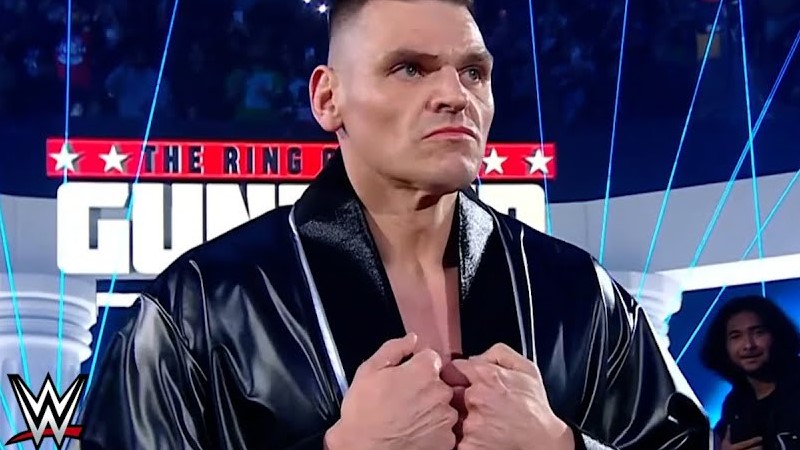
WWE Leans Into Gunther’s “Career Killer” Persona – WWE appears to be reinforcing a defining element of Gunther’s on-screen persona following a recent trademark filing tied directly to his recent booking. As of January 26, WWE filed a new trademark with the United States Patent and Trademark Office for the term “Career Killer,” a label that aligns closely with how The Ring General has been presented over the past year.
Gunther’s recent run has been marked by victories positioned as career-ending moments. In 2025, he was portrayed as the man who ended the in-ring careers of both Goldberg and John Cena, two of the most accomplished names in WWE history. Now, heading into Royal Rumble weekend, the narrative surrounding Gunther suggests that AJ Styles could be next. Whether or not that angle fully plays out, the pattern is clear: WWE is consistently framing Gunther as a final obstacle for legendary opponents.
The “Career Killer” trademark filing further supports that direction. According to the USPTO description, the trademark is intended to cover a wide range of entertainment services connected to professional wrestling. These include live wrestling exhibitions and performances, broadcast appearances across television, radio, and online platforms, as well as wrestling-related news, fan engagement services, and digital content such as newsletters and blogs. The scope of the filing suggests long-term branding intentions rather than a one-off nickname.
If WWE begins referring to Gunther as the “Career Killer” on-air, particularly during the Royal Rumble premium live event, it would not be coincidental. Trademark filings often precede new catchphrases, nicknames, or character branding being introduced on television, allowing WWE to protect the intellectual property before it becomes part of regular programming.
Gunther’s current positioning sets him apart from typical dominant champions. Rather than simply winning matches, his victories are framed as definitive conclusions to storied careers. That presentation elevates the stakes of his feuds and reinforces his image as a ruthless and historic figure within WWE.
Should the “Career Killer” label be officially attached to Gunther, it would represent a calculated expansion of his character, one that aligns cleanly with how he has already been portrayed and potentially signals how WWE plans to use him going forward.