
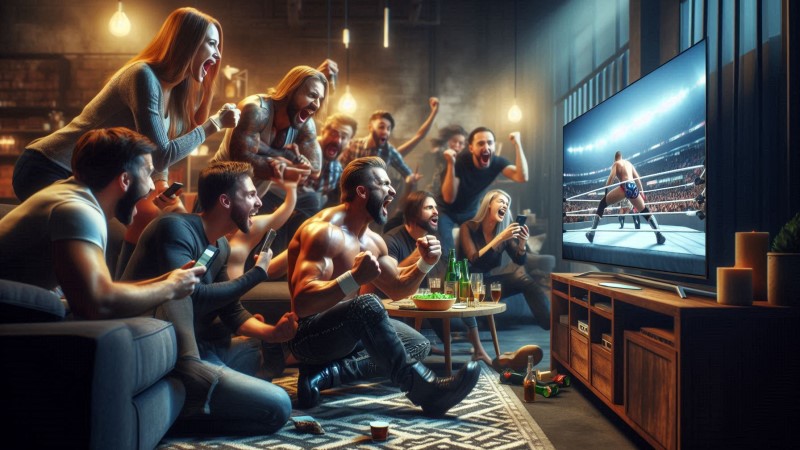
Entertainment industries that clung too hard to traditional distribution models got left behind. Those that adapted early thrived. Wrestling sits at an interesting crossroads right now, watching how other sectors successfully made the jump from legacy platforms to digital-first approaches.
The parallels between how different entertainment sectors navigated this transition offer genuinely useful lessons for wrestling promotions trying to build sustainable audiences in 2026.
How Television Lost Its Grip
Traditional TV dominated entertainment for decades because it controlled access. You wanted to watch content, you subscribed to cable, you accepted their schedule. Then streaming arrived and demolished that entire model within about ten years.
Podcasting followed a similar pattern. Radio stations controlled audio content, dictated schedules, and limited access through geographic broadcasting. Podcasts removed every single barrier, letting creators reach global audiences directly without needing station approval or airtime slots.
The transition was not just about technology. It was about audience expectations changing permanently. Once people experienced on-demand content, scheduled programming felt archaic. Wrestling still operates primarily on weekly television schedules, which increasingly feels like fighting the tide.
The Casino to Sweepstakes Evolution
Traditional casinos required physical presence, expensive infrastructure, and regulatory complexity that limited expansion. The industry seemed locked into that model until digital alternatives proved otherwise. Sweepstakes casinos emerged as clever workarounds to regulatory restrictions while serving the same audience desire for entertainment.
The best sweepstakes bonuses now compete directly with traditional casino offerings by focusing on accessibility and user experience rather than physical grandeur. Players can access hundreds of games instantly from phones without traveling to specific locations or navigating complex regulations. The platforms adapted to where audiences actually were rather than forcing audiences to come to them. Sweepstakes operators understood something crucial: lowering barriers to entry matters more than maintaining prestige. Traditional casinos spent fortunes on marble floors and chandeliers. Digital platforms invested in smooth user experiences and generous welcome bonuses that got people playing immediately. The contrast in priorities reflects fundamentally different thinking about how to serve audiences.
What Wrestling Has Actually Done
WWE launched the Network in 2014, which seemed forward-thinking at the time. Then they sold it to Peacock, which moved it back into a traditional media company’s ecosystem. AEW built around television from day one, securing cable deals that felt weirdly retro for a promotion starting in 2019.
Independent promotions adapted faster. Companies like GCW built followings through FITE TV and YouTube, reaching global audiences that could never attend their warehouse shows. They understood distribution mattered more than production budgets.
Major wrestling organizations still measure success primarily through television ratings and live attendance. Those metrics made sense in 1985. In 2026, they tell incomplete stories about actual audience engagement.
Where the Real Opportunity Sits
Wrestling’s biggest advantage is that it already creates year-round content. Unlike sports with defined seasons, wrestling produces new storylines weekly. This naturally suits digital platforms designed for constant content consumption. The industry just has not fully leveraged this strength.
Imagine a promotion built entirely around on-demand viewing with no fixed schedule. Release matches and storyline segments when they are ready. Let audiences consume content at their own pace. Use data to understand which wrestlers and storylines actually drive engagement rather than guessing based on crowd noise.
The technology exists. Platforms like Patreon, YouTube memberships, and Twitch subscriptions already prove fans will pay directly for content they value. Wrestling could adopt these models tomorrow if promotions were willing to move away from traditional television structures.
The Revenue Model Problem
Television deals pay guaranteed money upfront. Digital platforms require building audiences first, then monetizing them. That difference terrifies companies accustomed to predictable broadcast revenue. It is the same fear that kept radio stations from taking podcasting seriously until it was too late.
Sweepstakes casinos faced identical challenges. Traditional casino operators had proven revenue from physical locations. Going digital meant gambling on untested models. The companies that took that gamble won. The ones that waited are now playing catch-up in markets where digital-first competitors already dominate.
Making the Shift
Wrestling does not need to abandon television completely. It needs to stop treating TV as the primary platform and digital as supplementary. Flip that thinking. Build for digital-first consumption, then let television serve as a promotional channel driving people to where the real content lives.
Wrestling coverage has tracked how independent promotions experiment with these models more freely than major companies. They have less to lose and more to gain from taking risks on new distribution approaches.
In Summary
Every entertainment sector that successfully transitioned to digital did so by prioritizing audience access over traditional gatekeeping. Podcasts killed radio schedules. Streaming destroyed cable bundles. Sweepstakes casinos made physical locations optional. Wrestling can either learn from these examples or repeat the mistakes of industries that waited too long.
The question is not whether wrestling will go digital-first. It is whether promotions adapt proactively or get forced into it after losing audiences to entertainment that already figured this out.
AdvertisementAdvertisement
Advertisement
 Posted in
  Tags:
Tags: