
Wrestling’s future never arrives with a single bell. It seeps in through entrances, through the confidence of a lock-up, through the first time a crowd decides a newcomer is not “promising” but inevitable. As 2026 approaches, the next generation is no longer waiting in the wings; it is already main-roster adjacent, already tournament-tested, already clipped into a thousand short videos before the show ends.
The industry’s talent routes now run in parallel: WWE’s developmental brand NXT, designed as a training ground before Raw and SmackDown; AEW’s willingness to mix styles and partners; New Japan Pro-Wrestling’s tournament culture; and the increasingly formal bridges between U.S. television and lucha libre tradition. The “global” in global superstar is no longer a slogan. It is an itinerary.
The pipeline as a spectacle
WWE’s talent factory has become part of the show. NXT began in 2010 and functions as WWE’s developmental brand, and that identity is now a selling point rather than a footnote. Viewers watch prospects learn on live TV, then carry those habits into bigger arenas.
This is why certain names feel ready for 2026 even before they are fully crowned. Bron Breakker, whose style is routinely described as a powerhouse approach and whose spear has become a signature, fits WWE’s modern preference for explosiveness and camera clarity. Carmelo Hayes offers a different promise: athletic ease and the kind of timing that plays well in highlight culture. Tiffany Stratton represents another strand of the same future—performance-ready presentation with the athletic base that lets a character live inside motion, not just entrance music.
WWE’s next era
In the streaming age, a superstar is not only a match on Saturday; it is a presence on Monday and Friday, week after week, without losing shape. That is where the “next generation” will be tested hardest.
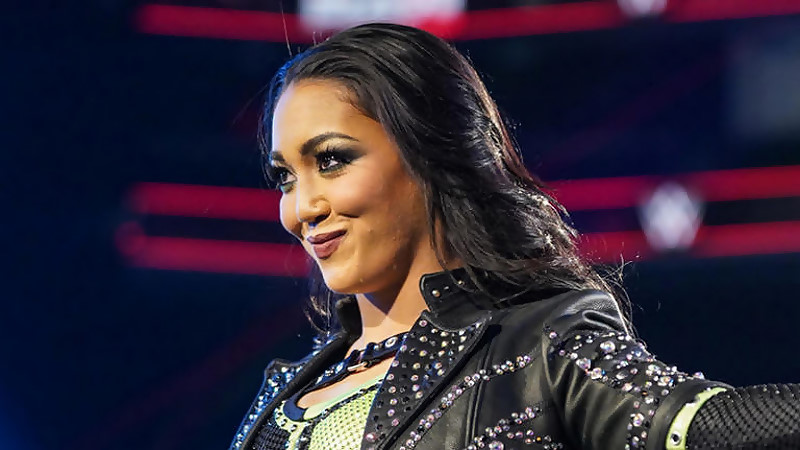
Ilja Dragunov’s reputation has long been tied to intensity, the kind that makes even small exchanges feel consequential. The question for 2026 is not whether his matches connect but whether that intensity can be paced into a long season, the way a striker must learn to win in different weather. On the women’s side, WWE’s younger headliners are arriving with an unusual blend of polish and experience. Roxanne Perez, who worked under the name Rok-C before joining WWE, has already lived through the independent grind that teaches survival: you learn to adapt, or you disappear.
None of this guarantees superstardom. Wrestling is still a booking art. Yet the raw materials are obvious: speed, character discipline, and a style that reads cleanly on camera.
AEW’s “open borders” approach and Japan’s furnace
AEW was founded in 2019, and one of its defining traits has been treating wrestling as an international language rather than a closed dialect. That has made the promotion a proving ground for wrestlers whose careers are built on movement between scenes.
Konosuke Takeshita is a good example of that modern identity: a Japanese wrestler with roots in DDT Pro-Wrestling who has become a visible figure in AEW’s ecosystem and has also worked in New Japan’s high-pressure tournament environment. In 2025, he won the G1 Climax 35, a tournament that NJPW positions as its most important annual test of singles endurance and consistency.
If WWE is a factory and AEW is a lab, NJPW is still a furnace. Tournament culture compels wrestlers to prove they can excel on ordinary nights, not just in spotlight moments.
Shota Umino and Yota Tsuji belong to a generation that came through NJPW’s system and then expanded outward—excursions, new looks, bigger expectations. Ryohei Oiwa represents the next layer behind them, a wrestler developed through the NJPW Dojo and tied to modern faction life in a way that immediately places him in stories rather than isolation.
For 2026, the most intriguing question is not who has the best match. It is who can stay compelling through the long middle of the year, when fatigue shows, and audiences get picky.
The second-screen economy
Promos, social clips, and live reactions are not secondary. They are part of the match. Wrestling’s next boom is happening in the palm. A match lands differently when fans can freeze-frame the counter, argue about the near fall, and share a clip before the next entrance hits. The audience is no longer only reacting; it is publishing.
Sports betting platforms operate within the same attention economy, especially around major events when curiosity peaks. A fan might keep a card preview open, follow injury notes, and download melbet to compare markets as part of the broader sports-and-entertainment routine that surrounds combat-style programming. The responsible version of that habit is clear: follow local law and age rules, protect accounts with strong security, and treat spending as a fixed entertainment budget rather than a plan.
The key point for 2026 is not that betting exists. It’s that wrestling’s “live” feeling now includes a whole ecosystem—streams, stats, social feeds, and second-screen decisions.
Lucha libre’s new bridges
A decade ago, a luchador could be world-class and remain a rumor to many U.S. viewers—known through GIFs and word of mouth. That wall has weakened.
In April 2025, WWE announced its acquisition of Lucha Libre AAA Worldwide in partnership with the Mexican company Fillip, with Worlds Collide events positioned as a showcase for cross-roster matchups. That shift changes the visibility equation for high-flying talent. El Hijo del Vikingo, long associated with AAA’s modern spectacle, has gained significant exposure through the WWE-AAA collaboration, including a high-profile title defense. In practical terms, it means the next generation of global superstars may arrive through lucha rhythms without needing to “translate” themselves into something else.
The next superstar will be built in public
The wrestlers most likely to own 2026 share a single trait: they understand that performance is now both physical and digital. They can wrestle for the live crowd and still make sense to the online crowd.
In that environment, a fan who follows storylines through social updates might also check MelBet Facebook Somalia to keep up with platform news and community chatter, while still treating the hobby with the same restraint they would apply to any paid entertainment.
The future looks crowded. WWE’s pipeline continues to deliver athletes built for weekly television. AEW continues to mix styles until new identities emerge. NJPW keeps forging resilience through tournaments. The WWE-AAA bridge is widening the spotlight for lucha excellence. And fandom keeps moving where it always moves: toward whatever feels urgent.
AdvertisementAdvertisement
Advertisement
 Posted in
  Tags:
Tags: