
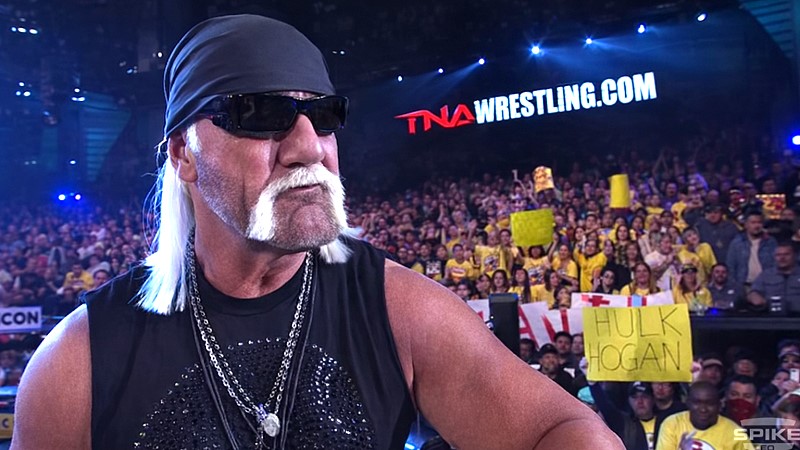
Hulk Hogan spoke openly about the severe toll his body endured during his time in TNA Wrestling in a new Netflix documentary released today. The interviews were filmed in the final months before Hogan’s death on July 24, 2025, at the age of 71.
The documentary focuses on Hogan’s long history of injuries, including six back surgeries, and the extreme level of medication he was using at the time. He described his daily fentanyl intake in detail and recalled a pharmacist’s reaction to the dosage.
“I was taking 80-milligram fentanyls, two in the morning, stuffing them under my gums,” Hogan said. “I had two 300-milligram patches of fentanyl on my legs, and they gave me 6, 1,500-milligram fentanyl lollipops to eat. I went to the pharmacy. He goes, ‘You should be dead. We have never seen a human being take this much fentanyl.’”
Former TNA executive Eric Bischoff also addressed Hogan’s condition during that period. He admitted the situation was difficult to witness while they were working together.
“It was hard to see,” Bischoff said. “There were times when I felt really s**ty about myself for making him do it.”*
Bischoff added further details about Hogan’s physical state at the time.
“His back was in so much pain. I would literally have to go to his hotel and help him get out of bed, to get into the shower, to get ready to go to the show. I mean, he was contractually obligated to do it. He wanted to do it.”
Hogan also discussed the medical steps taken to manage his condition after multiple surgeries. He explained how doctors recommended a spinal cord stimulator following his sixth procedure.
“After back surgery number three, I can’t walk. Surgery number four, I go back in. Surgery number five, I go back in. Surgery number six, really getting over this crap,” Hogan said.
“Dr. Zeno said, ‘You need a spinal cord stimulator.’ Okay, what is that? They said it’s a battery we’re gonna put in your back, and you have a portable like a TV clicker in your hand. Every time there’s any pain, it shoots an electronical signal to your head and it blocks the pain. It gives you a jolt of electricity.”
Wrestling writer David Shoemaker shared his perspective on Hogan’s in-ring limitations during that era.
“He wasn’t doing the basic bits of pro wrestling. All he could do was bleed,” Shoemaker said. “But obviously there’s a physical limitation to everything, and he showed us those limits in the ring at TNA.”
Hogan reflected on the long-term damage caused by his wrestling style, especially his signature move.
“I would change one thing. Started dropping the leg when I was in Japan. Arms used to be really huge. So why would you jump up and drop the leg and land on your tailbone every night for 40-plus years when you can use the sleeper hold and not take any bumps?”
Booker T also commented on the impact of that move over time.
“Every time Hulk Hogan did that leg drop, compounding on his back, every time. Those were the small things over years.”
Hogan closed by reflecting on how his life might have been different if he had made other choices earlier in his career.
“I would have been like a normal 70-year-old guy that could walk around. Wouldn’t be limping.”
The documentary is now available to stream on Netflix.
AdvertisementAdvertisement
Advertisement
 Posted in
  Tags:
Tags: